

Tea Tree Oil: A Natural Remedy for Skin and Wellness
Tea tree oil is one of the most versatile essential oils, widely recognized for its antibacterial, antifungal, and anti-inflammatory properties. It has been used for centuries to support skin health, reduce acne, and promote overall wellness.
Tea tree oil is steam-distilled from the leaves and twigs of Melaleuca alternifolia, a small tree native to the coastal regions of New South Wales, Australia. For thousands of years, the Bundjalung Aboriginal people used crushed tea tree leaves as a traditional remedy, inhaling the vapors or applying them to wounds. European settlers observed these practices in the 18th century, and by the early 20th century, Australian medical literature had begun documenting its properties.
Key Aromatic Compounds
The characteristic clean, medicinal aroma of tea tree oil comes primarily from terpinen-4-ol, which typically comprises 30-48% of a high-quality oil. Other significant constituents include gamma-terpinene, alpha-terpinene, and 1,8-cineole. The International Standard ISO 4730 defines quality tea tree oil as having a terpinen-4-ol content of at least 30% and a 1,8-cineole content below 15%.
Tea Tree in Aromatherapy
In aromatherapy, tea tree is valued for its crisp, clean aroma that evokes freshness and clarity. Its scent profile sits at the intersection of herbal and medicinal - bright and slightly sharp, with a cool, camphoraceous undertone. Aromatherapy practitioners often reach for tea tree when formulating blends intended to support a sense of cleanliness, alertness, and environmental freshness.
Tea tree blends well with eucalyptus, lavender, lemon, peppermint, and rosemary. In diffuser blends, a small amount of tea tree adds an invigorating, purifying quality without overwhelming the blend.
Tea Tree and MONQ
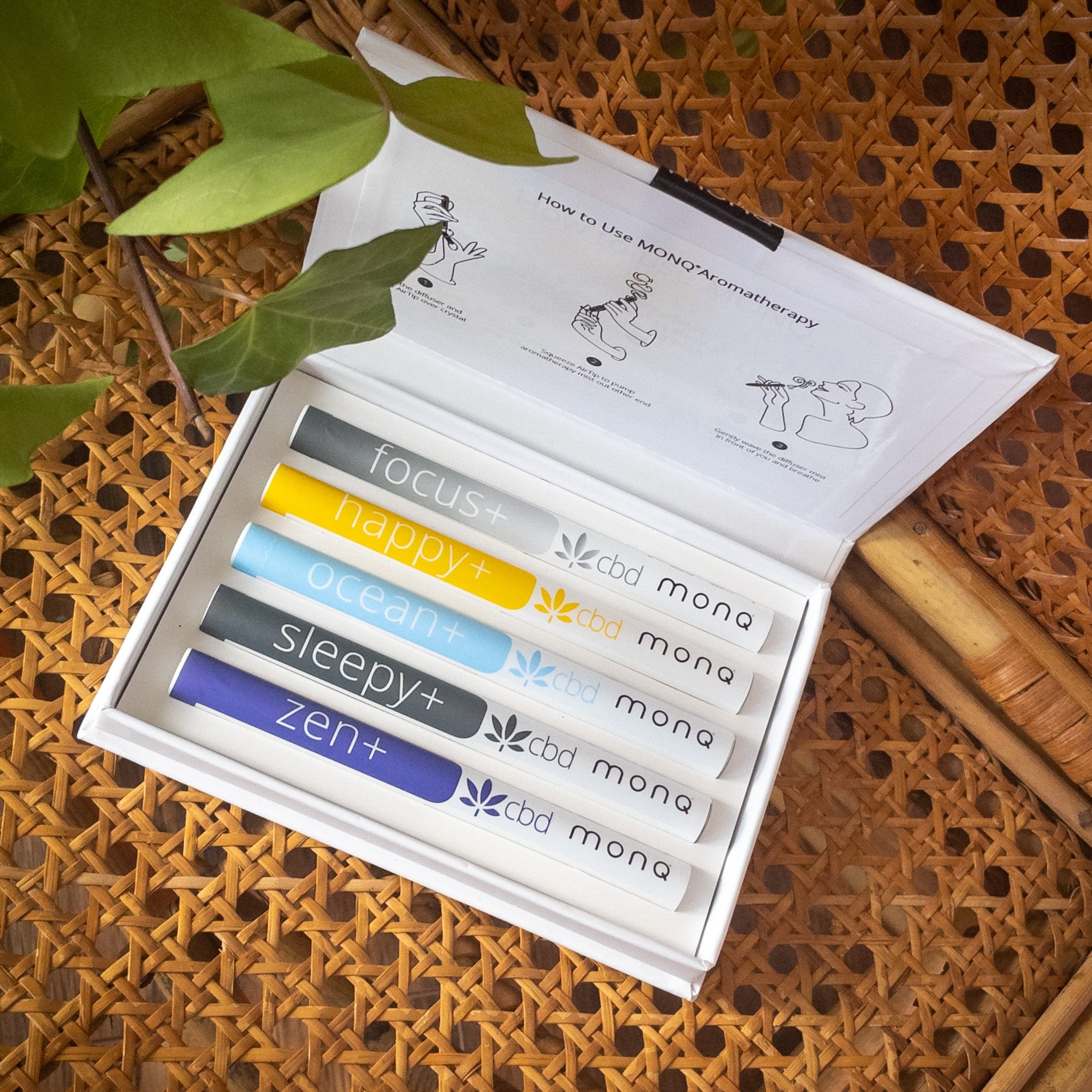
MONQ uses tea tree as a functional aromatic component in blends where a clean, fresh quality is called for. To experience MONQ, hold the diffuser gently to your lips, inhale through your mouth, and exhale through your nose - this sends the aromatic compounds through your nasal passage on the exhale, where your olfactory receptors fully process the blend.
Disclaimer: The above information is provided for general wellness and educational purposes only. Please note that while individual essential oil ingredients may have been shown to exhibit certain independent effects when used alone, the specific blends of ingredients contained in MONQ diffusers have not been tested. No specific claims are being made that use of any MONQ diffusers will lead to any of the effects discussed above. Additionally, please note that MONQ diffusers have not been reviewed or approved by the U.S. Food and Drug Administration. MONQ diffusers are not intended to be used in the diagnosis, cure, mitigation, prevention, or treatment of any disease or medical condition. If you have a health condition or concern, please consult a physician or your alternative health care provider prior to using MONQ diffusers. MONQ blends should not be inhaled into the lungs. Why? It works better that way. No Nicotine Ever. Inhale through the mouth, exhale through the nose. MONQ Diffusers are not intended for individuals under 18, or women who are pregnant or nursing.










Leave a comment