

How Aromatherapy Works: The Science of Scent
Aromatherapy is the therapeutic use of aromatic plant compounds — primarily essential oils — to support physical and emotional well-being. It is one of the oldest wellness practices in recorded history, with documented use in ancient Egypt, Greece, China, and India spanning more than 3,500 years. What has changed in the modern era is our ability to understand, at a molecular and neurological level, exactly why it works.
What Essential Oils Actually Are
Essential oils are concentrated aromatic compounds extracted from plants — typically through steam distillation, cold pressing, or solvent extraction. They are not oils in the conventional sense (they contain no fatty acids and are not greasy). They are volatile aromatic compounds: molecules that readily evaporate at room temperature and become airborne, where they can be inhaled and detected by the olfactory system.
The aromatic compounds in essential oils belong to several chemical families. Terpenes and terpenoids — including linalool (lavender), limonene (citrus), and alpha-pinene (pine and fir) — are the most extensively studied. Phenylpropanoids, esters, and aldehydes round out the primary compound classes. Each class has distinct aromatic properties and distinct patterns of interaction with the olfactory receptor system.
The Receptor Mechanism
The human nose contains approximately 400 functional olfactory receptor types, encoded by the largest gene family in the human genome. Each receptor responds selectively to certain molecular shapes and sizes. When an aromatic compound reaches the olfactory epithelium — the receptor-bearing tissue in the upper nasal cavity — it binds to one or more receptor types, triggering an electrical signal.
The pattern of receptor activation produced by a given compound is what the brain interprets as a specific scent. Linalool activates a different receptor pattern than limonene. The brain reads the pattern, not the individual receptor. This combinatorial coding scheme is what allows humans to detect and distinguish thousands of distinct odors from just 400 receptor types.
The Neural Pathway
The olfactory signal travels from the receptor neurons in the epithelium along the olfactory nerve to the olfactory bulb — a small structure at the base of the frontal lobe that processes and relays scent information. From the olfactory bulb, signals project directly to several brain regions:
- Amygdala — emotional processing, fear and safety responses, mood regulation
- Hippocampus — memory formation and retrieval, spatial context
- Piriform cortex — conscious scent perception and identification
- Hypothalamus — hormonal regulation, autonomic nervous system control
- Entorhinal cortex — integration with memory and spatial navigation
These comparatively direct connections help explain why scents can become strongly associated with memories, emotions, people, and places. Vision, hearing, touch, and taste all route through the thalamus — a relay station — before reaching higher cortical areas. Olfaction does not.
How This Translates to Aromatherapy
When aromatic molecules reach the olfactory receptors, the resulting signals are processed by brain regions involved in identifying odors and forming associations. How a person experiences an aroma can vary with preference, memory, expectation, intensity, and setting. Lavender has a soft, floral, and herbaceous aroma that many people associate with quiet or restful settings. Rosemary's 1,8-cineole has been associated with improved working memory performance. Peppermint's menthol produces a cooling sensation and a mild alerting effect that is well-documented in the literature.
These are not dramatic pharmaceutical effects. They are subtle, real, and consistent with the mechanism — a gentle modulation of emotional and cognitive state through the most ancient and direct sensory pathway the brain has. To learn how MONQ puts this science to work, explore how MONQ brings natural aromatherapy to everyday life.
Why Delivery Method Matters
Different aromatherapy formats create different kinds of scent experiences. Room diffusers disperse aroma through a shared space, while personal aromatherapy devices provide an aroma experience close to the user.
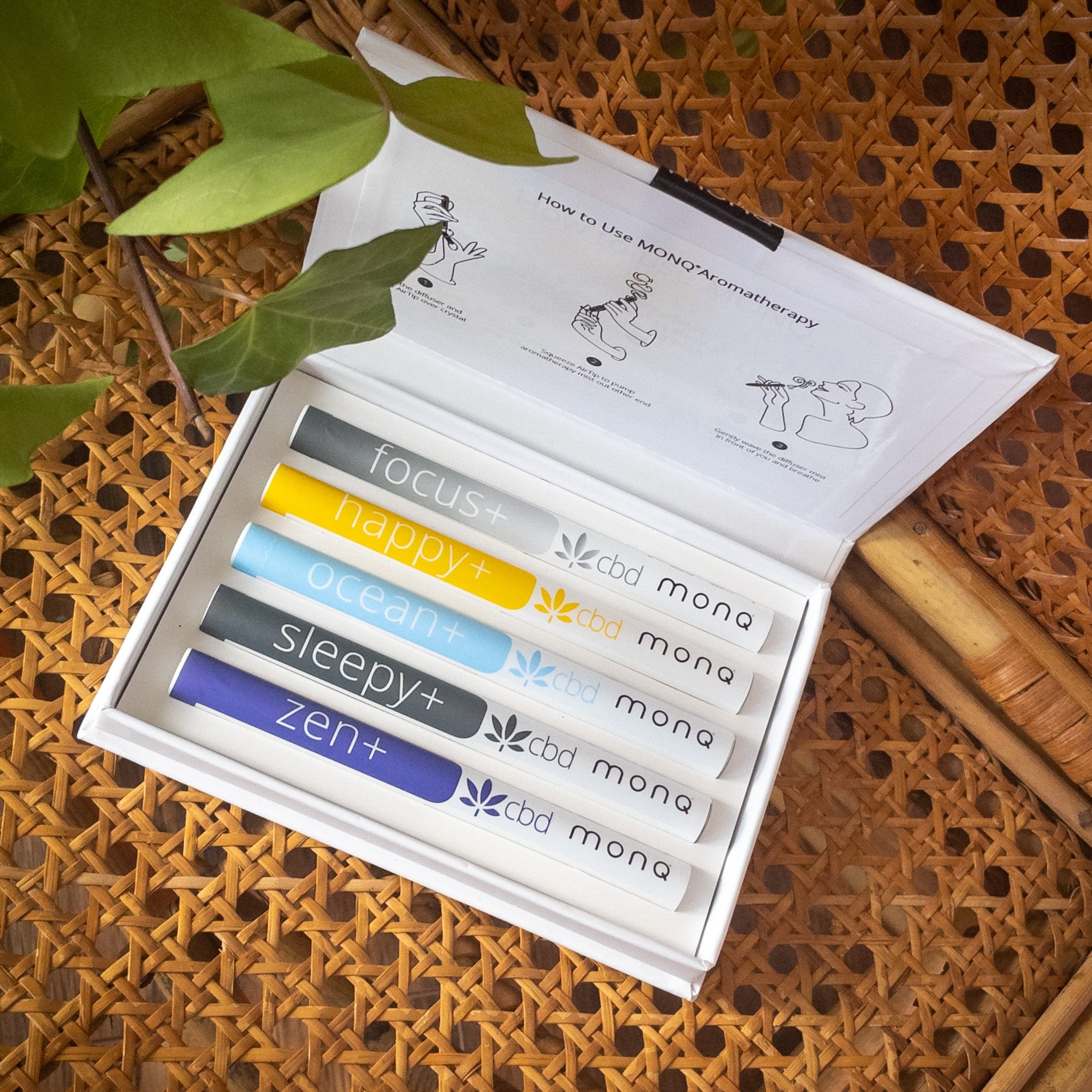
To use MONQ, draw gently into the mouth, hold briefly, and exhale through the nose. Do not inhale into the lungs. This mouth-in, nose-out method allows the aroma to be experienced as it is exhaled through the nose.
The complete technique is explained — step by step, with the underlying science — on the How to Use MONQ page.
The Role of Essential Oil Blending
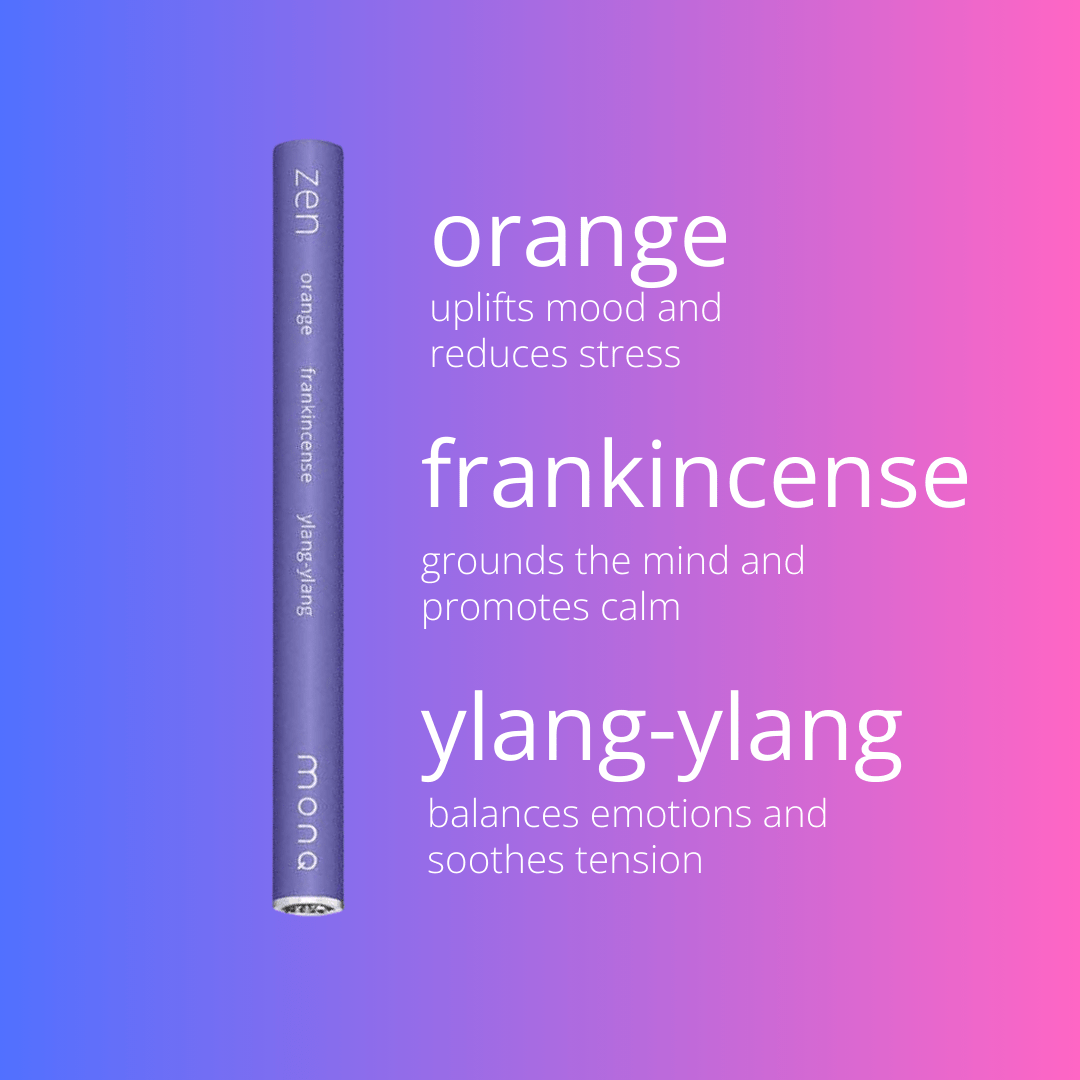
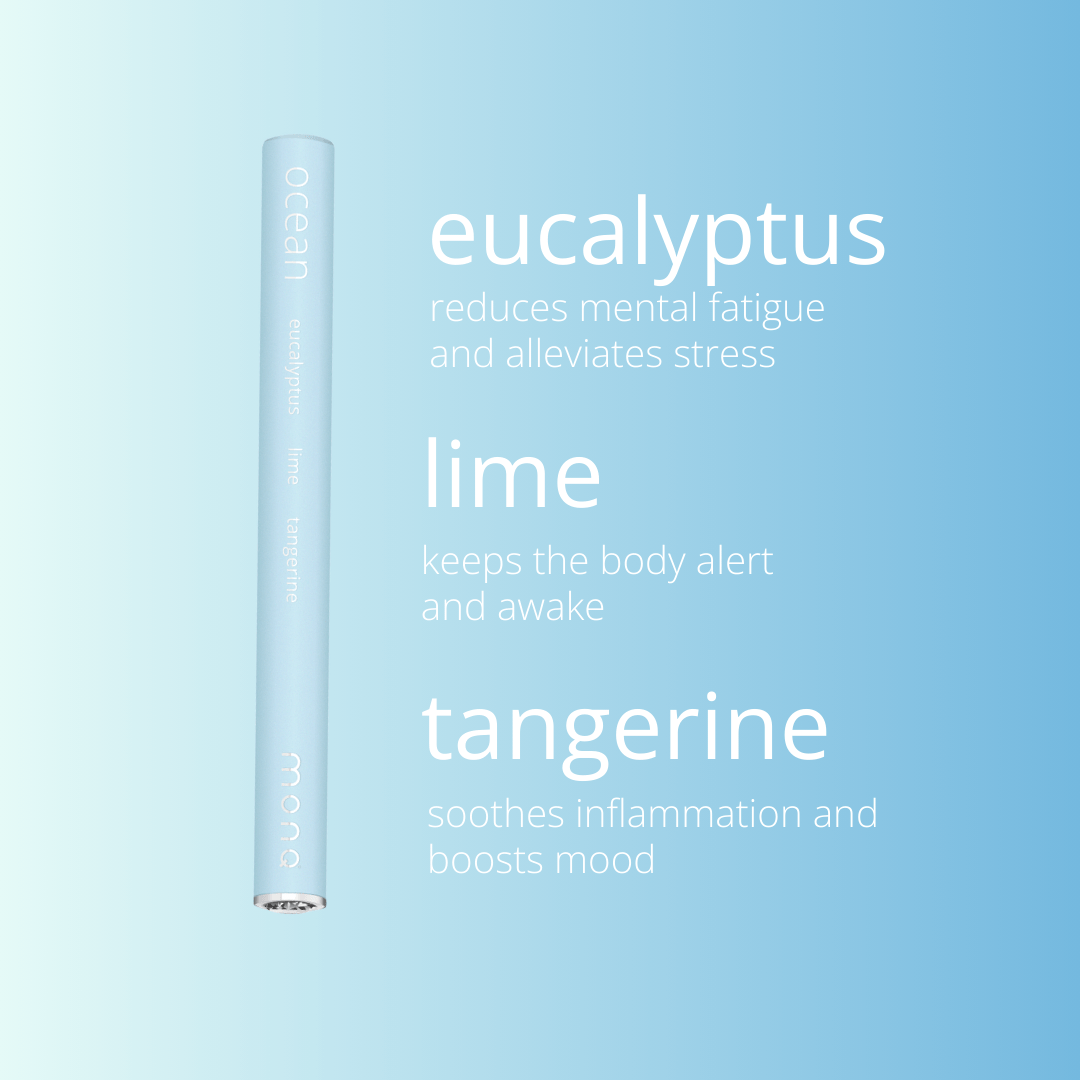
MONQ blends combine complementary aromatic notes to create a recognizable and cohesive scent profile. Zen MONQ pairs frankincense, orange, and ylang-ylang — three botanicals with overlapping grounding and calming aromatic properties. Happy MONQ pairs fennel, thyme, and vanilla — a combination that moves from herbal brightness to soft floral warmth.
The goal in each blend is aromatic coherence: a unified scent experience in which the individual notes complement one another rather than competing for attention. This approach applies principles of aromatic composition to product formulation, emphasizing balance, compatibility, and a cohesive scent experience.
Disclaimer: The above information is provided for general wellness and educational purposes only. Please note that while individual essential oil ingredients may have been shown to exhibit certain independent effects when used alone, the specific blends of ingredients contained in MONQ diffusers have not been tested. No specific claims are being made that use of any MONQ diffusers will lead to any of the effects discussed above. Additionally, please note that MONQ diffusers have not been reviewed or approved by the U.S. Food and Drug Administration. MONQ diffusers are not intended to be used in the diagnosis, cure, mitigation, prevention, or treatment of any disease or medical condition. If you have a health condition or concern, please consult a physician or your alternative health care provider prior to using MONQ diffusers. MONQ blends should not be inhaled into the lungs. Why? It works better that way. MONQ Diffusers Never Contain Nicotine. Inhale through the mouth, exhale through the nose. MONQ Diffusers are not intended for individuals under 18, or the indicated age in your location. They are also not intended for women who are pregnant or nursing.










Leave a comment